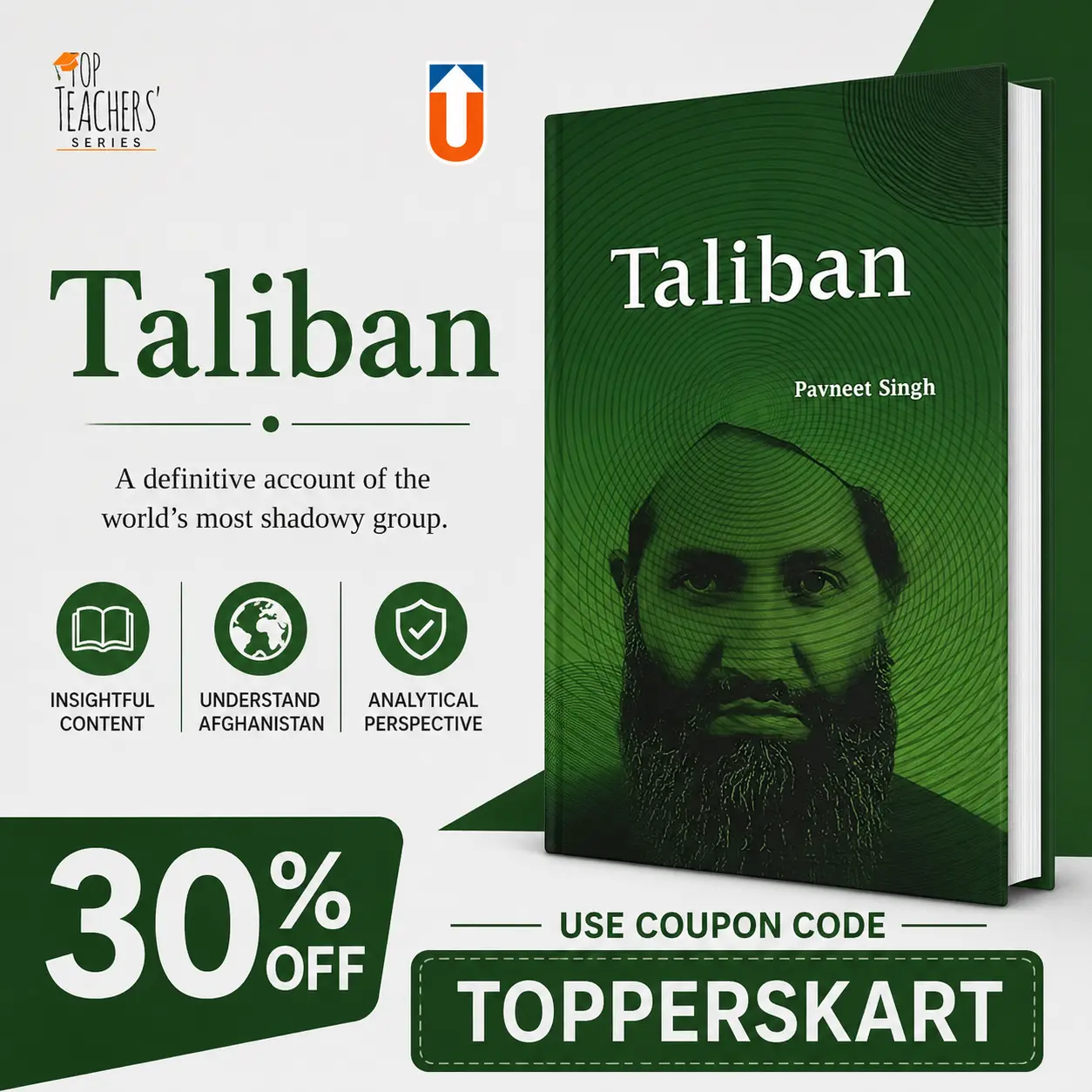
Taliban by Pavneet Singh | Afghanistan, Geopolitics & India’s Stakes | UPSC International Relations | Paperback (English)
₹180.00

100% Safe & Secure Payments

Easy return and replacements

Extra Discount & Free Delivery
Product Short Details
Product Short Details
Afghanistan is the question UPSC keeps returning to, and most aspirants answer it with headlines. They know the Taliban took Kabul. They can name the actors. What they cannot do is explain how the group emerged, why it endured, or what any of it means for India — which is precisely what an International Relations answer is graded on.
- ✅ How the Taliban actually emerged — the history behind the headlines
- ✅ Why it matters to India — security, regional balance, and the stakes for Delhi
- ✅ Concise and readable — a serious subject without the academic bloat
- ✅ Strong material for GS Paper-II (IR), Essay and the Interview
- 📘 Paperback | English | Pavneet Singh | Unique Publishers
🎉 FLAT 30% OFF — Apply coupon code TOPPERSKART at checkout.
Product Description
Product Description
Taliban — by Pavneet Singh
Afghanistan sits at the centre of India’s neighbourhood policy, and it is one of the most reliably examinable topics in International Relations. Yet most aspirants know it only as a sequence of news events: the American withdrawal, the fall of Kabul, the return of the Taliban.
News is not analysis. An answer built on headlines can describe what happened. It cannot explain why — and in GS Paper-II, why is the entire question.
This book supplies what the news cycle never does: the history, the structure and the strategic logic of the most opaque political movement in the region, and a clear account of why any of it should matter to India.
What the Book Does
- Traces the emergence of the Taliban — the conditions, the actors and the sequence that produced it, rather than the version that fits into a news bulletin
- Explains why it endured — the question that most coverage skips, and the one an examiner actually cares about
- Sets out India’s stakes — the security implications, the regional balance, and the strategic calculations Delhi is forced to make
- Places it in a wider frame — why the Taliban matters to several countries, not to India alone
Why This Is Useful for UPSC
Afghanistan questions in GS Paper-II are never factual. They ask you to assess India’s options, evaluate a strategic dilemma, or weigh the regional consequences of a shift in power. That requires background depth — the kind that lets you write with confidence rather than caution.
- International Relations (GS-II) — India’s neighbourhood, regional groupings, and the geopolitics of Central and South Asia
- Internal Security (GS-III) — cross-border terrorism and the security spillovers into the region
- Essay — Afghanistan recurs in essays on state failure, fundamentalism, and the limits of intervention. Specific, informed examples are what separate a good essay from a general one
- Interview — a live geopolitical question you will very plausibly be asked, where an informed and balanced view stands out sharply
Concise, Not Superficial
Most serious writing on Afghanistan runs to several hundred dense pages — valuable for a scholar, unrealistic for an aspirant with a syllabus to finish. This book is deliberately compact: enough depth to reason with, short enough to actually read during a UPSC year.
That is a genuinely difficult balance to strike, and it is the main reason this book earns a place on an aspirant’s shelf while a full-length academic history usually does not.
A Note on Approach
This is an analytical account, not an advocacy one. Understanding how a movement gained power is not the same as endorsing it — and for a civil services aspirant, that distinction is the whole job. UPSC does not want your outrage on Afghanistan. It wants your assessment: what happened, why, what it means for India, and what Delhi’s options now are. Read the book, form your own view, and be prepared to defend it.
Who Is This Book For?
- UPSC CSE aspirants preparing International Relations in GS Paper-II
- PSIR optional students, for whom Afghanistan and regional security are core material
- Essay and Interview candidates who want a genuine, defensible position on a live geopolitical question
- Aspirants whose IR answers rely on news recall and lack historical grounding
- Readers interested in Afghanistan, South Asian geopolitics and India’s strategic environment
About the Author
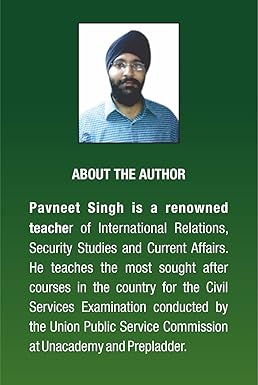
Pavneet Singh is a well-known teacher of International Relations, Security Studies and Current Affairs, and has taught some of the most sought-after Civil Services courses in the country on Unacademy and PrepLadder. He is the author of several bestselling UPSC titles, including Indian Polity Mind Maps, Passport to LBSNAA, My Notes from the 2nd ARC Reports, UPSC Lal Kitab and The Indian Economy, and teaches a free PSIR Optional course on his YouTube channel Pavneet Singh UPSC Classes.
Book Details
- Author: Pavneet Singh
- Publisher: Unique Publishers
- Language: English
- Binding: Paperback
- Subject: International Relations, Afghanistan, regional security
- Exam: UPSC CSE — GS Paper-II (IR), PSIR Optional, Essay & Interview
Why Order From ToppersKart?
- FLAT 30% OFF — use coupon code TOPPERSKART
- 100% original, publisher-sourced edition
- Cash on Delivery available, fast shipping across India
- Easy return & replacement
Frequently Asked Questions
Q. Is this a UPSC syllabus book?
It is a focused subject book on Afghanistan and the Taliban, written by a UPSC International Relations teacher. It gives you depth on a topic your standard IR notes cover in a paragraph.
Q. Is it useful beyond GS Paper-II?
Yes. It supports Internal Security in GS-III, provides concrete examples for Essay, and is genuinely useful preparation for an Interview question on the neighbourhood.
Q. I’m taking PSIR optional. Is this relevant?
Very much so. Afghanistan, regional security and India’s neighbourhood policy are core PSIR territory, and this gives you the historical grounding most aspirants lack.
Q. What else has Pavneet Singh written?
Indian Polity Mind Maps, Passport to LBSNAA, Fundamentals of Ethics, Indian Society and UPSC Lal Kitab — all in our Unique Publishers collection.